
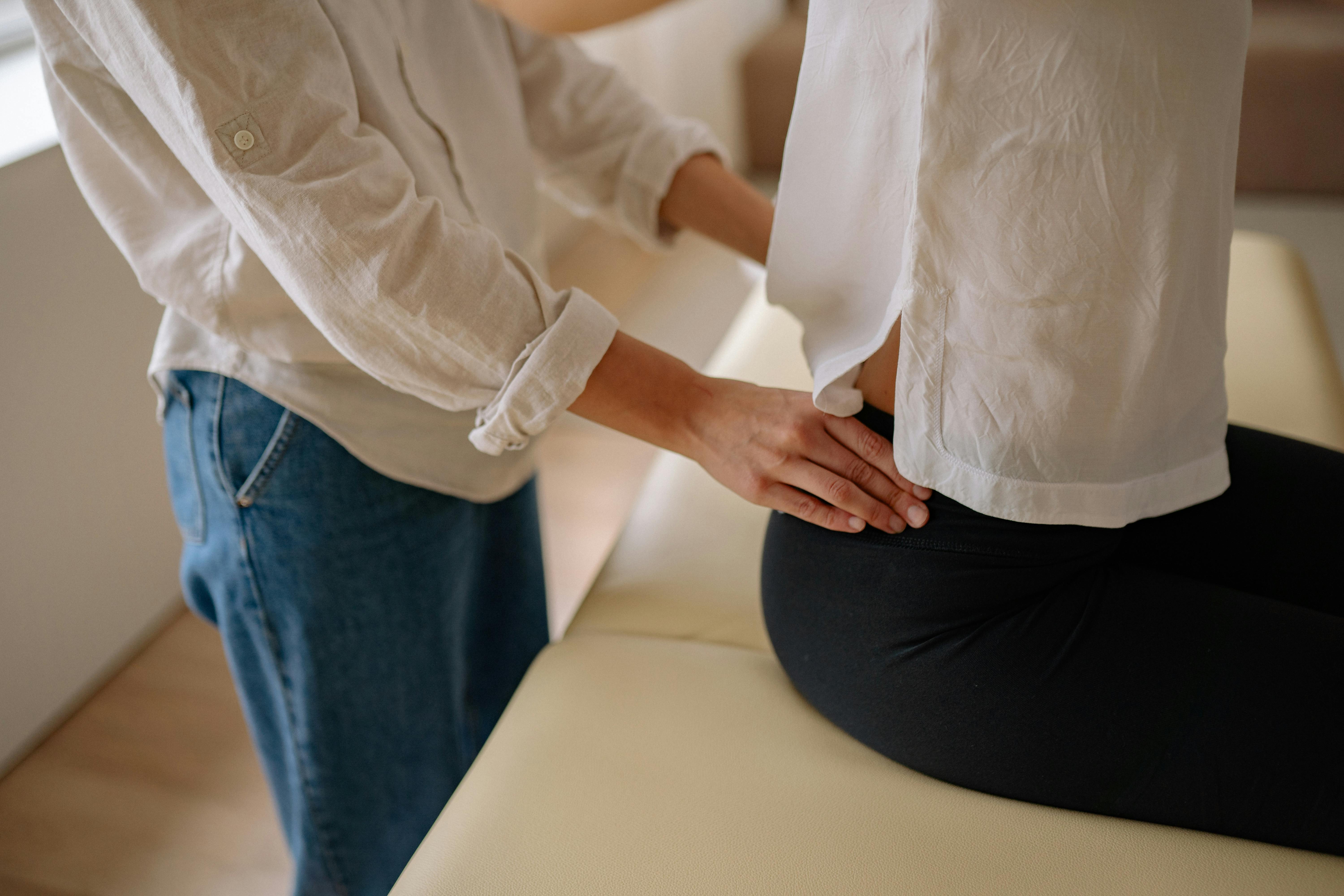
Sciatica can make everyday movement uncomfortable, whether the pain feels like a dull ache in the lower back or a sharp sensation running down the leg. While Western approaches often focus on muscle tension, nerve compression, and mobility work, Traditional Chinese Medicine (TCM) views sciatic pain through the lens of energy flow and meridian pathways.
Combining these perspectives may offer a more well-rounded way to address discomfort, improve flexibility, and support long-term relief by targeting both physical tension and energetic imbalance. Keep reading to learn more!
Understanding Sciatica Symptoms and Common Causes

Sciatica is not a condition itself but a symptom of irritation or compression involving the sciatic nerve, the largest nerve in the body. The sciatic nerve begins in the lower spine, travels through the hips and glutes, and extends down each leg. When this nerve becomes irritated, symptoms can appear anywhere along the pathway. Sciatica may develop suddenly after lifting, twisting, or prolonged sitting, or it may build gradually due to chronic posture or spinal issues.
Symptoms of Sciatica
Sciatica symptoms vary depending on the source of irritation. Many people experience pain that radiates from the lower back into the glutes and down the back of one leg. Tingling, numbness, burning sensations, or muscle weakness may also occur. Symptoms are often more noticeable when sitting for long periods, standing up after inactivity, or performing certain movements that compress the lower spine.
Common Causes of Sciatica
Several structural and lifestyle factors can contribute to sciatic pain. Herniated discs, spinal stenosis, degenerative disc disease, and muscle tightness in the glutes or hips are among the most common causes. The piriformis muscle, located deep in the glute area, can also irritate the sciatic nerve when it becomes tight or inflamed. Prolonged sitting, repetitive movement patterns, and poor posture may increase pressure on the lower spine and surrounding tissues.
How Western Stretching Targets Tight Muscles Around the Sciatic Nerve

Western stretching approaches focus on reducing tension in muscles that may compress or irritate the sciatic nerve. Since the nerve travels through the lower back, hips, glutes, and legs, tightness in any of these areas can contribute to discomfort. Stretching aims to improve mobility, increase circulation, and reduce stiffness that limits natural movement.
- The piriformis stretch is commonly recommended because the piriformis muscle lies close to the sciatic nerve. When overly tight, it may create pressure that mimics or worsens sciatica symptoms.
- Hamstring stretches may also help because shortened hamstrings can pull on the pelvis and alter posture, increasing strain on the lower back.
- Hip flexor stretches support pelvic alignment.
- Gentle spinal twists may relieve tension through the lumbar region.
Regular stretching may not eliminate the root cause of sciatic pain, but it can improve mobility and reduce muscular tension that contributes to symptoms. The key is consistency and avoiding aggressive movements that create sharp or worsening pain.
Which TCM Meridians Are Most Involved in Sciatic Pain?

Bladder Meridian
The Bladder meridian is often considered the primary pathway involved in sciatic pain because it closely follows the same route as the sciatic nerve. This meridian begins near the inner eye, travels down the spine, moves through the glutes, and continues along the back of the legs. In TCM, pain along this pathway may indicate Qi stagnation, muscle tension, or blockage caused by Cold and Damp conditions.
For people with sciatica, tenderness or tightness may appear along the lower back, hamstrings, or calves where the Bladder meridian runs. Acupuncture points such as BL23, BL25, BL36, and BL40 are commonly associated with posterior leg and lower back discomfort. Stretching the hamstrings and spinal muscles may complement this meridian by improving circulation and movement along the same pathway.
Gallbladder Meridian
The Gallbladder meridian runs along the outer hip, side of the leg, and lateral knee, making it relevant for sciatica that radiates through the outer glute and thigh. In TCM, this meridian is associated with smooth movement and flexibility. When Qi becomes restricted along the Gallbladder channel, pain, stiffness, and limited mobility may occur.
Sciatic pain that feels concentrated around the hip joint or outer thigh may reflect tension along this meridian. Points such as GB30 are frequently used in acupuncture treatments for sciatic discomfort because of their location near the gluteal region. Hip-opening stretches and glute mobility work may align well with Gallbladder meridian pathways, especially for people who experience tension from prolonged sitting.
Kidney Meridian
The Kidney meridian is not always the first channel associated with sciatica, but it plays an important supporting role in TCM. The Kidney system governs the lower back, bones, and overall vitality. Chronic lower back weakness or recurring sciatic pain may be interpreted as a Kidney deficiency pattern, especially when discomfort is long-lasting or accompanied by fatigue.
Because the Kidney meridian supports structural integrity and spinal health, practitioners may include it in treatment plans for persistent sciatic symptoms. Acupuncture points along the lower back and inner leg may be used to nourish Kidney energy. Stretching that promotes spinal mobility and strengthens the core may support this meridian indirectly by improving stability around the lumbar region.
Liver Meridian
The Liver meridian is connected to the smooth flow of Qi and the health of tendons and connective tissue. Tightness, irritability, or stress-related muscle tension may contribute to stagnation along this pathway. Since stress can influence posture and muscle guarding, the Liver meridian may become relevant for people whose sciatic symptoms worsen during periods of emotional strain.
This meridian travels through the inner legs and pelvis, areas that can influence hip mobility and lower-body alignment. In TCM, Liver Qi stagnation may contribute to tightness in surrounding muscles that indirectly affect the sciatic nerve. Gentle stretching, breathwork, and movement practices may help release tension associated with this channel.
4 Stretch-and-Meridian Pairings for You to Try

One of the easiest ways to combine Western stretching with TCM is to think of muscles and meridians as overlapping maps of the same body region. Western anatomy explains where tension occurs physically, while TCM describes how energy flows through those same areas internally.
Hips: Figure-Four Stretch + Gallbladder Meridian
The figure-four stretch targets the piriformis and deep hip muscles, which are common contributors to sciatic discomfort. For someone unfamiliar with TCM, this stretch simply helps release tension around the outer hip and glute area. For those familiar with meridian theory, it also aligns with the Gallbladder meridian pathway that travels through the side of the hip and thigh.
Glutes: Pigeon Pose + Bladder and Gallbladder Meridians
Pigeon pose stretches the glutes, piriformis, and outer hips. Beginners may appreciate it as a mobility exercise that reduces stiffness around the sciatic nerve. In TCM, this area overlaps with both the Bladder and Gallbladder meridians, making it useful for addressing discomfort that radiates through the glutes and into the legs.
Hamstrings: Forward Fold + Bladder Meridian
Hamstring stretches are often recommended for sciatica because tight posterior leg muscles can increase tension on the pelvis and lower back. A seated or standing forward fold stretches the back of the legs, improving flexibility and circulation. In TCM, the hamstrings closely follow the Bladder meridian, which is commonly associated with sciatic pain patterns.
Lower Back: Gentle Spinal Twist + Kidney Meridian
Gentle spinal twists can reduce tension in the lumbar spine and surrounding muscles. Someone new to meridian theory may think of this as improving spinal mobility and easing stiffness. Those with TCM experience may view it as a way to support the Kidney meridian, which is associated with lower back strength, vitality, and structural support.
When Combining TCM and Stretching May Support Long-Term Relief

Stretching and TCM may work especially well together because they address different sides of sciatic pain. Stretching focuses on the physical body by improving flexibility, releasing tight muscles, and supporting mobility. TCM, on the other hand, looks at patterns of imbalance that may contribute to chronic pain, including stagnation, deficiency, or poor circulation of Qi and blood.
Combining both approaches may be helpful for people who experience recurring flare-ups, tension from long hours of sitting, or discomfort that returns despite exercise alone. Stretching can provide immediate relief by reducing muscle tightness, while acupuncture, acupressure, or meridian-based practices may support recovery over time.
Long-term improvement often comes from consistency rather than quick fixes. Building a routine that includes movement, posture awareness, stress management, and TCM-based support may reduce the likelihood of future irritation. For persistent or worsening symptoms, medical evaluation is important to rule out severe nerve compression or underlying spinal conditions.
The information provided in this article is for educational purposes only and is not intended as a substitute for professional medical advice, diagnosis, or treatment. Always seek the guidance of your physician or other qualified health provider with any questions you may have regarding a medical condition. Never disregard professional medical advice or delay in seeking it because of something you have read in this article.
Leave a Reply